Loop Hero
- 4.7
- Rating
- 1.00M
- Installs
- Free
- Price

 Analysis by App-foxy
I expected a fairly simple retro role-playing game when I first opened Loop Hero, but its first action immediately showed me that it plays by a different set of rules. I do not directly steer a hero through every fight or choose each attack. Instead, I build the route, place the world around it, and watch my decisions turn an empty wasteland into a dangerous, useful adventure. That small change in responsibility is the heart of the experience.
Published by Playdigious, this free game belongs to the role-playing category and carries a Teen content rating. It is available for devices running Android 9 or later, and the current version is 1.0.5. The store summary says “Save the forgotten world,” but what matters in practice is how that goal is broken into short expeditions. I send a hero around a loop, react to the results, collect resources, and decide whether to risk another circuit or return with what I have.
That rhythm makes it unusually easy to play in small pieces. I can begin a run while waiting for something, pay attention to the important choices, and stop when the expedition reaches a natural conclusion. At the same time, it is not a passive idle game. The meaningful decisions happen before and during the loop, and poor planning can make a promising run collapse. After spending time with it, I found a game that rewards patience, experimentation, and a willingness to learn from failure more than quick reflexes.
You May Also Like

 Blood Strike: 2.5 Anniversary
Blood Strike’s Loadouts Turn Every Drop Into a Tactical Gamble
A close look at Blood Strike’s custom loadouts: how fast access to signature weapons reshapes its battle royale rhythm, rewards preparation, and narrows the gap between fights.

 Pandora - Music & Podcasts
Pandora’s Music Is Easy to Start, but Harder to Recover
Pandora’s strength is its low-effort path from a seed to a station. Its weak spot is how much confidence it asks you to place in connection, setup, and quiet recovery.

 8 Ball Pool
 Is Built on Rivalries, Rematches, and Routine
A close look at the rivalries, rematches, shared routines, and unanswered safety questions that turn a quick pool match into a persistent mobile community.

 Samsung Music
’s Quiet Strength Is Playing What You Already Own
Its reach comes less from spectacle than from dependable access to a personal library. That simplicity is both the app’s strongest retention engine and its ceiling.

 AccuWeather: Weather Radar
AccuWeather Review: A Quick, Clear Forecast for Everyday Decisions
For everyday plans, the best forecast is the one you can understand quickly. AccuWeather makes rain timing, radar, and local conditions easy to act on, with a few trade-offs.

 Hill Climb Racing
Why Hill Climb Racing Still Turns Crashes Into One More Run
A tiny car, a bumpy hill and one more upgrade: Hill Climb Racing keeps resurfacing because its simple chaos makes every near-miss feel personal.
More From Our News Desk



How each loop turns a small decision into a full expedition
I focus on the small choices that make each circuit feel like a complete expedition, rather than treating the loop as a string of automatic battles. In my experience, the useful question is not simply what card to place, but what kind of problem I want the next pass to solve: safer progress, better rewards, or a chance to learn from a risk. That planning also makes it easier to recognize when it is time to leave.
The first action is building a route, not swinging a sword
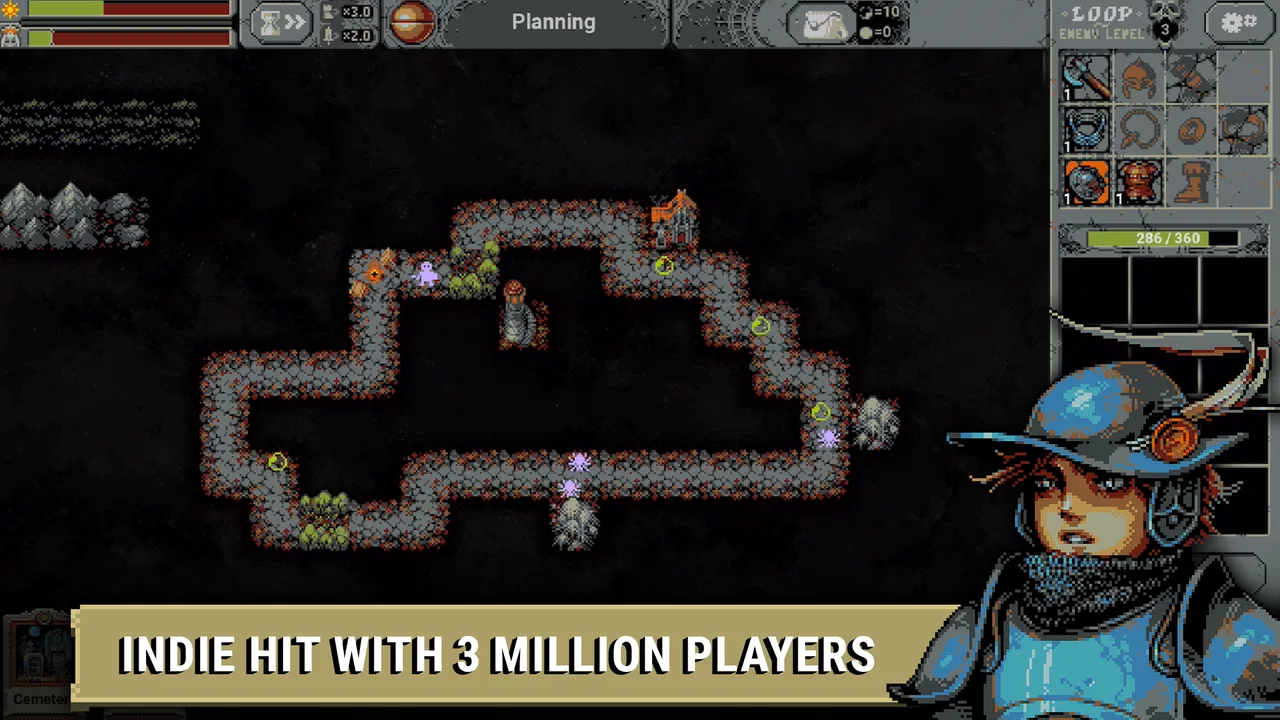
The most important adjustment for new players is understanding that the hero is only one part of the action. The route itself is my main tool. As the character travels, I place cards and shape the spaces around the path. A card can create a location, alter the danger of an area, or provide a useful effect, so every placement changes what the next few encounters might look like.
This gives the opening minutes a satisfying sense of construction. I am not simply waiting for an automatic battle to finish. I am asking whether a new location will help my current build, whether it will create too much pressure, and whether its reward is worth the enemies it introduces. The game presents these questions through a compact interface, but the consequences can stretch across an entire expedition.
Combat happens automatically once the hero meets enemies, which may sound limiting if you normally expect direct control in an Android role-playing game. In my experience, it is better understood as preparation-based combat. Equipment, route choices, card timing, and the balance between safety and ambition determine how well the hero performs. I still feel responsible for the result because the fight is usually the visible outcome of decisions I made earlier.
The first useful habit is to avoid treating every empty space as an invitation to place something immediately. An open section of the loop can be valuable because it gives the hero room to recover or move through a less dangerous stretch. Filling the route too quickly may produce more rewards, but it can also make the next circuit harder before the character is ready. That trade-off is easy to miss when the board begins to look more productive.
Another practical lesson is to think in terms of the whole circuit rather than the next battle. A placement that looks excellent beside one location may create an awkward combination farther along the route. I learned to inspect the path as a complete sequence: where the difficult fights appear, where the hero can regain strength, and where the next return to camp will happen. This wider view makes the game feel less like random card placement and more like planning a small expedition.
The feedback rhythm comes from watching choices become consequences
Once the loop is active, the game settles into a distinctive rhythm. The hero advances, encounters appear, battles resolve, equipment changes, and new cards enter my hand. I watch the character become stronger while the route becomes more demanding. That feedback is clear enough to follow without constant tapping, yet there is enough uncertainty to keep me interested in the next circuit.
The strongest moments are not always victories. Sometimes I notice that the hero is surviving comfortably but collecting the wrong kind of equipment. At other times, the rewards look promising while health and defensive options are becoming too thin. The game encourages me to read the run as a changing situation rather than judge it by one successful fight.
Because the hero travels repeatedly through familiar spaces, I begin to recognize patterns. A location that was harmless early in a run can become a liability when stronger enemies join the route. A reward that seemed modest can become important when it fills a weakness in the current setup. This makes the feedback feel earned: the game is not only handing out upgrades, it is teaching me how the pieces interact through repeated exposure.
The interface is compact and the pixel-art presentation keeps the screen readable, but the amount of information can still feel dense at first. New players may need time to understand which changes matter immediately and which ones are part of a longer plan. I recommend resisting the urge to optimize every card from the beginning. It is more useful to notice one relationship at a time, such as how a dangerous placement affects the next pass or how equipment quality changes a battle’s outcome.
There is also a mental shift from traditional role-playing games. In a conventional dungeon crawler, I might search every room and control the hero’s position directly. Here, the route is fixed once the expedition begins, and my influence comes from the things I add to it. That restriction is not a weakness for me; it gives every placement more weight. However, anyone looking for fast manual combat, free exploration, or a large party to command may find the feedback slower and more indirect than expected.
Rewards are useful because they also create new questions
Winning a battle gives more than a moment of progress. I collect equipment and resources that help the current expedition or support broader development. The reward system works because it constantly asks me to compare immediate usefulness with future value. A new item may improve the hero now, while a resource may be more important after returning from the loop.
That choice becomes especially interesting when the inventory starts filling with alternatives. I cannot simply assume that the newest item is best. I look at the current weakness of the hero, the enemies still ahead, and how much longer I realistically expect the run to last. A slightly less impressive item can be the sensible choice if it supports survival during a difficult section.
The game’s rewards also encourage experimentation with different approaches. I am not only chasing a higher number after every encounter; I am trying to understand which combinations make a route manageable. This is one of the less obvious strengths of the design. The reward is partly material and partly informational. A failed setup can still teach me that a certain type of route is too aggressive for the current stage of progression.
Returning from a loop with resources gives the larger game a sense of continuity. The next expedition does not begin from exactly the same position, even when the path and basic actions feel familiar. That long-term layer is what prevents the experience from becoming a series of disconnected runs. I always have a reason to test a new arrangement, improve a weak point, or see whether an earlier mistake can be avoided.
My practical advice is to avoid spending every useful reward as soon as it appears. Keep enough attention on what the run is trying to accomplish. If the immediate goal is survival, a defensive improvement may matter more than an attractive but risky option. If the route is already stable, taking a calculated risk can produce better returns. The best reward is not automatically the rarest-looking one; it is the one that fits the situation I have created.
The reset is a decision, not simply a punishment
The most important button in a run is often the decision to stop. I can continue around the loop for more battles and more rewards, but each extra circuit increases the chance that the route will become too dangerous. Returning at the right moment is part of the strategy, not an admission that the expedition went badly.
This is where the action-feedback-reward pattern becomes complete. I place a card, watch its effect, earn equipment or resources, and then decide whether the reward justifies another pass. If I continue, the next loop offers more potential and more risk. If I reset by leaving, I protect the progress I have earned and prepare for a stronger attempt. That tension is the reason I often begin another session immediately after finishing one.
There is a subtle difference between a disappointing reset and a successful one. A disappointing reset happens when I wait too long and lose the chance to preserve a good haul. A successful reset happens when I recognize that the run has already delivered what I needed. Learning that distinction takes practice because the game makes “one more loop” feel tempting. The extra circuit is often where greed turns a secure expedition into a costly lesson.
This structure suits mobile play particularly well. A short session can end after a deliberate return, while a longer session can continue through several increasingly ambitious loops. I do not need to reach a conventional chapter ending before putting the phone down. For an everyday example, I could start a run during a commute, make a few route decisions while checking the screen, and leave after securing a useful haul rather than trying to complete a long uninterrupted quest.
The trade-off is that the game asks for attention at uneven intervals. Some moments are quiet, while an important placement or retreat decision may arrive after a period of observation. It is not ideal if I want a game that rewards constant input every second. It is better for players who enjoy checking a plan, watching it develop, and stepping in when the situation changes.
What makes the mobile version a good fit, and where it may frustrate
As a mobile role-playing game, this works best when I want strategy without the commitment of a large open-world adventure. It gives me progression, equipment decisions, and a world to rebuild, but it compresses those ideas into repeatable loops. Compared with a conventional turn-based role-playing game, it removes much of the direct command-by-command combat and replaces it with route management. Compared with an idle game, it gives me far more responsibility over the conditions that produce the results.
That middle ground is the game’s clearest identity. I can play without constantly tapping through attacks, yet I cannot ignore the expedition entirely. I have to decide what to place, when to improve the route, how much danger to accept, and when to leave. Players who enjoy deck-building decisions, gradual progression, and runs that reveal their lessons over time will probably understand the appeal quickly.
Players who should skip it are those looking for a story-first adventure with frequent dialogue, direct character movement, or cinematic presentation. The retro visual style is purposeful, but it does not try to compete with modern action games on spectacle. Likewise, anyone who dislikes repeating a route to refine a strategy may see the central loop as monotonous rather than compelling.
The game is free to download, with in-app purchases ranging from $0.49 to $3.89 per item. I would approach those purchases as optional conveniences rather than the reason to play. The core appeal comes from understanding the loop and making better decisions, not from treating every obstacle as something that should be bypassed. Since the content rating is Teen, parents should also consider whether the game’s darker fantasy atmosphere and combat presentation suit the intended player.
Its reception suggests that many players have connected with this unusual structure: it holds a 4.7 average from around 28 thousand ratings, has around 1 thousand written reviews, and has passed 1 million installs. Those figures do not replace personal taste, but they fit my impression that the game has found a strong audience among people who want something more thoughtful than a standard automatic battler.
Small habits that make the first sessions better
My first recommendation is to treat early runs as experiments rather than tests of skill. Place a few cards, observe what they change, and remember which combinations created pressure. The game becomes more enjoyable when I stop expecting immediate mastery. Its systems reveal themselves through consequences, and a failed expedition can be more useful than a safe but uninformative one.
Second, decide what the run is trying to achieve before adding danger. If I need resources, I can shape the route around sustainable fights. If I am testing equipment or a particular setup, I should avoid making the board so chaotic that I cannot tell what caused success or failure. This simple separation between farming and experimentation makes the feedback much easier to read.
Third, watch the hero’s condition before the reward screen makes the decision feel urgent. The best retreat point is often slightly earlier than my instinct suggests. I have found that preserving a solid haul gives the next run more value than gambling everything for a reward that may not solve the current weakness. The game is generous with opportunities to continue, but it expects me to recognize when continuing has stopped being sensible.
Finally, use the reset as part of the learning process. After a run, I think about the first moment when the route became unstable, not only the final defeat. Was the problem an overfilled path, a poor equipment choice, or a failure to leave while the expedition was still healthy? Asking that question turns repetition into progress and gives the next session a specific purpose.
My verdict on the loop
After playing it, I see Loop Hero as a role-playing game about managing consequences rather than controlling every movement. Its action is the placement of cards and the shaping of a route. Its feedback is the changing balance between enemies, equipment, health, and opportunity. Its reward is both tangible progress and a clearer understanding of the system. Its reset is the moment when I decide that protecting a successful run matters more than chasing one extra prize.
That structure gives every session a natural reason to continue. I finish one expedition with a new idea, a missing resource, or a route I want to rebuild more intelligently. The game does not need to promise endless spectacle because the loop itself creates curiosity. I want to know whether a different arrangement will produce a safer journey, whether a risk will finally pay off, and whether I can leave at exactly the right time.
My honest reservation is that the same repetition that makes the game satisfying can make it feel slow or opaque. The automatic battles are not for everyone, and the early learning curve asks me to accept uncertainty before the system becomes readable. Still, for players who enjoy thoughtful mobile strategy wrapped in a role-playing framework, the unusual design is worth the adjustment.
Playdigious has brought a distinctive experience to Android, and the free entry point makes it easy to see whether the loop suits you. I would recommend it to someone who likes planning more than reflexes, short sessions with meaningful decisions, and games where failure improves the next attempt. I would choose a more traditional role-playing alternative for direct combat, exploration, or a stronger focus on character dialogue. For me, though, the appeal is clear: the next session begins because the last loop always leaves one more decision worth testing.
FAQs for Loop Hero
01What is Loop Hero, and how does its gameplay work?
Loop Hero is a strategic roguelike adventure in which your hero automatically travels around a randomly generated loop and fights enemies without direct movement controls. Your main decisions involve placing landscape and building cards, equipping better items, managing resources, and choosing when to return to camp. Every loop changes the battlefield, making planning and risk management essential.
02Is Loop Hero free to play on Android or iOS?
Loop Hero’s availability and pricing depend on the platform and region. On mobile devices, it may be offered as a paid game or through a store-specific purchase model rather than as a completely free experience. Before downloading, check the official Google Play Store or App Store listing for the current price, supported devices, account requirements, and whether any additional purchases are included.
03Can I play Loop Hero offline?
Loop Hero is primarily designed as a single-player experience, and its core gameplay can generally be enjoyed without an active internet connection after installation. However, an internet connection may still be required for the initial download, updates, license verification, cloud-saving features, or store services. Offline behavior can vary by device, operating system, and version.
04Does Loop Hero include in-app purchases, advertisements, or multiplayer?
Loop Hero focuses on a single-player progression system rather than competitive or cooperative multiplayer. Depending on the platform edition, the game may not rely on constant advertisements or energy timers, but store policies and product versions can differ. Review the official listing carefully to confirm whether the mobile release contains optional purchases, ads, or other monetization features.
05Is Loop Hero suitable for beginners, and what should new players know?
Loop Hero is accessible to beginners, but its systems become increasingly complex as new classes, cards, buildings, enemies, and resources are unlocked. Early defeats are expected and help you learn which combinations work together. New players should experiment with card placement, avoid staying in dangerous loops for too long, and return to camp regularly to preserve valuable resources.
Pros
- Unique card-based roguelike system makes every run feel different.
- Works well in short sessions
- with progress continuing after each expedition.
- Deep resource management rewards careful planning and experimentation.
- Pixel-art visuals and retro sound design create a charming atmosphere.
- Offline play makes it convenient for travel or areas without internet.
Cons
- The opening hours can feel slow before enough cards and classes unlock.
- Runs may become repetitive when pursuing specific resources or upgrades.
- Limited direct combat can disappoint players wanting more active control.
- Some systems and card interactions take time to understand clearly.
- Long expeditions can require patience
- especially during resource farming.

Loop Hero
Gallery